Wednesday, 26 February 2014

Do you think you are no good at meditation?


Are you someone who perhaps quite likes a bit of quiet at the start and finish of your yoga class, but secretly thinks you are ‘no good’ at meditation?

Or perhaps you don’t come to yoga at all and have tried to meditate and think you are just no good at it?

This post is for you … read on!

(If you are someone who thinks being still is a waste of valuable time, or just more than impossibly hard, well stay with me - but you are probably not even reading anyway.)

Do you think your mind is just the sort of mind that never shuts up?

Perhaps you read my New Year blog and think well ‘inner wisdom’ is all very well for YOU, but I’m not sure I have any of that?

Don’t worry, I used to think I was pretty hopeless at it too. And a very long time ago I couldn’t even really see the point of meditation at all.

After all, the mind is built to create thoughts, and some of us have minds that do that oh so very well! And isn’t it good to have a mind? (Yes it is, the mind is a wonderful tool. But it doesn’t always serve us well, and it is fine to put it aside to get the benefits of meditation**.)

Let me tell you that meditation is definitely available to you.*

Oh are you feeling skeptical? You are different? 


Afterall you have so many things to worry about, plan, juggle, you have had all this crap in your life. It would be different if this hadn’t happened or that hadn’t happened or if that difficult person was a bit more reasonable or if you hadn’t suffered such hardships?  


Shockingly enough everyone has some crappy stuff to deal with, (yes it is true some would be construed as more crappy than others) and shockingly again in the big picture you are just not that special you know! And neither am ‘I’, yes it is shocking  isn’t it?

The thing is, it is the nature of the mind to create thoughts. That’s just what minds do. And we can’t really grasp meditation with the mind. We have to put the mind to one side, so to speak, to meditate. 

The good news is that there are TOOLS that are a bridge from an ordinary thinking mind state, to a meditative state.


So instead of just having to sit there and battle with thoughts, there are ways to lull the mind into a quieter state, so that it is easier for you to meditate.


These tools are concentration techniques, ways of focusing and steadying the mind. In Swami Shantananda’s wonderful 8 Steps to Stillness Learn to Meditate course (that she teaches in Blackburn South and I teach in Mt Waverley) we explore and practice a number of these tools. Things like breath focus, noticing body sensations, and mantra. Because we all learn differently, and have different preferences, we may find the technique that is best for us, but it is really good mental discipline to try them all. 

It requires discipline. But gentleness as well. There is a saying that in meditation you treat your mind like you would treat a small child. Be firm, but kind. And there’s another saying about meditation that I like too:


‘You can read all you like about meditation, but the benefit comes with the actual practice.’


There is something to be said about joining a group for meditation. The combined discipline and feel of the group can be wonderful incentive to keep up your practice when you are tempted to give up. Yes it is hard, in fact some people have told me that learning to meditate is the hardest thing they have ever done! But not one person has ever said that they are sorry that they learned the techniques, or that they didn’t get any benefits. Once you start, it definitely gets easier and before you know it you look forward to your meditation time.

So, if you want some tools and support, join a group or a class that practices still mind meditation. You won’t regret it. Or just find a spot and meditate. 20 minutes a day is a good way to start. Go on, do it!

Let me know how you go. 


*If you have a serious mental illness, check with your specialist before embarking on a meditation practice.

** Unless you have been hiding under a bushel, you will have heard some of the benefits of meditation. In no particular order, here’s just a few:

·          Reduced blood pressure
·          Reduced stress and therefore affects of the stress response in the body
·          Healing
·          Feelings of peace and calm and inner quiet and steadiness that eventually stay with you
·          Improved capacity to cope with the ups and downs of life
·          Feelings of centredness, connectedness and love
·          Ability to quietly observe without being drawn in to every drama
·          Fresh outlook on life (yes even the same old life)
·          Access to inner wisdom or intuition
·          Acceptance of self as individual within and as the whole
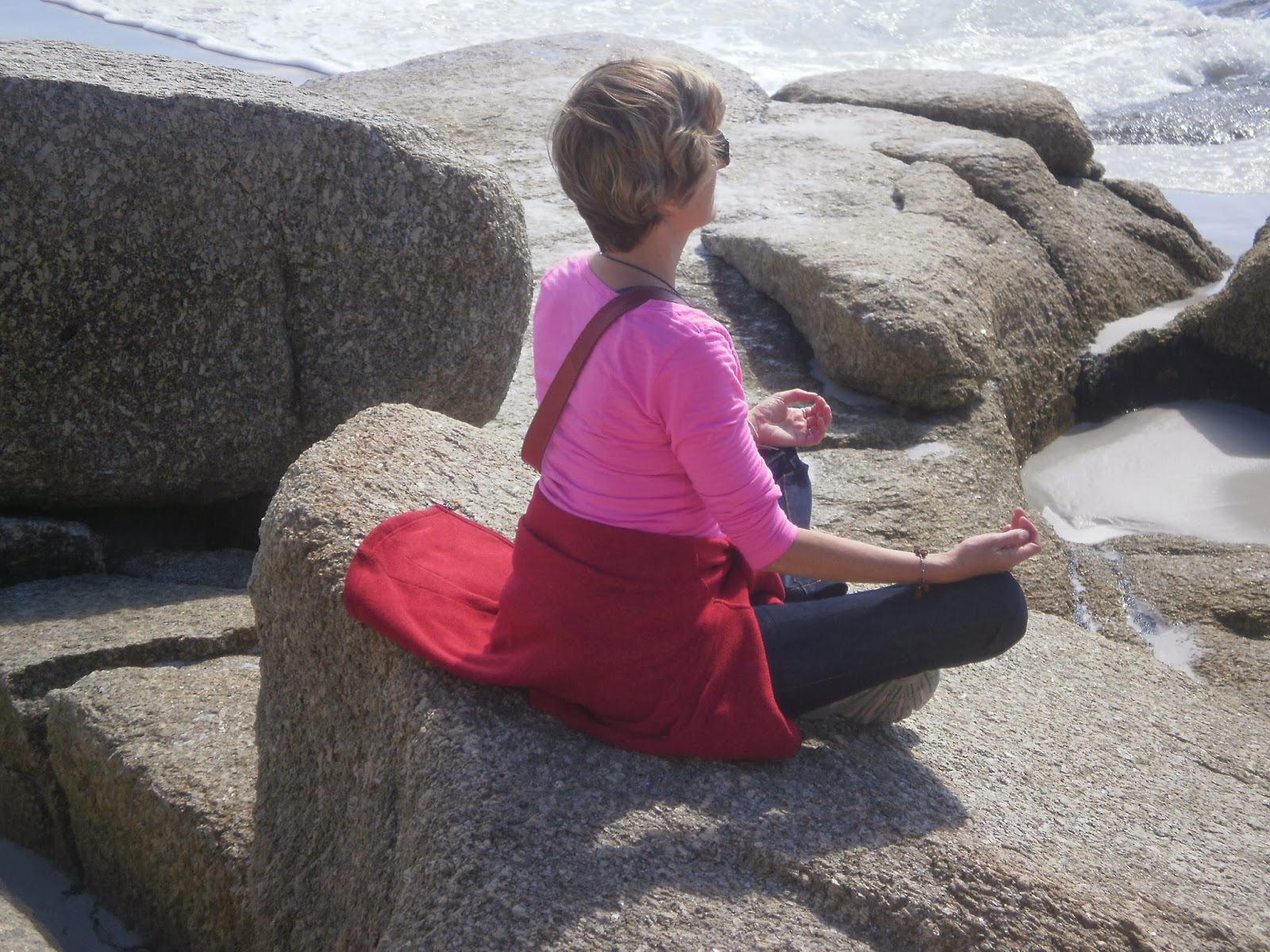


Here's a link about the 8 Steps to Stillness Learn to Meditate course and ongoing meditation at Waverley Yoga Studio: http://www.waverleyyoga.com.au/meditation.html

Here's the link to Swami Shantananada's Reflections: http://www.swamishantananda.com.au

Wednesday, 12 February 2014

On dealing with someone difficult


Ever had a difficult person in your life? Of course you have, I suppose you would be most unusual if you didn’t.

Sometimes we can walk away from those people who make us feel uncomfortable, or even worse, downright miserable. But suppose that isn’t a viable choice? Maybe it is a work colleague, or a family member, or someone who for whatever reason you have to keep seeing, what then?

There is a yogic practice called Dharana, it is one of Patanjali’s 8 limbs actually. (One of the practices Patanjali suggests we work with to help us to experience our natural state of Yoga, or Universal Consciousness, or Reality.) It has to do with focus and concentration, and a simple example would be when we stand in tree pose in the yoga room, where we use all our concentration and focus to balance.


But that’s not what I want to go on about here. I want to talk instead about a subset of Dharana called Bhavana. Having a difficult person in your life might be the perfect opportunity to practice a bhav.

That means trying out putting yourself into that person’s shoes and imagining what their life might be like.

Yes, spend some time in contemplation actually feeling what that person’s life might be like. The things that may have affected their outlook, the things that they do with their day, the people that they have in their life, and so on. Really mull it over and feel what it might be like to be that person.

Whenever I have done this I have come to the same conclusion, that we are all just doing our best to make our way in this world. We all have times where we make choices, and rather than judge someone’s choices as right or wrong, perhaps we can accept a situation with a bit more love and compassion.

Practicing a bhav may well help us to see that the difficult person has feelings of insecurity or inadequacy. 

For me, this brings feelings of compassion for that person who I may have been tempted to judge.

It doesn’t mean I condone people who are cruel, or bitchy and spiteful. It doesn’t mean I don’t feel hurt by cruelty and meanness. It doesn’t mean putting up with obviously harmful behaviour either. But it does open up a space in me to accept and be loving. It means I don’t have to bite back with a smart comment. It means I don’t have to withhold love. It means I can accept that person as they are. Perhaps they don’t seem quite so difficult.

After all, we are all perfectly human, perfectly divine, perfectly imperfect!

You might like to give it a go. I would love to hear back in the comments below.

Wednesday, 29 January 2014

Simple and obvious once you know, but truly profound


One of the most important teachings in yoga came up in the yoga studio the other day.

The Sanskrit term used in Patanjali’s Yoga Sutras is ‘vritti svarupya’. That is, mistaking the thoughts for reality. What? That’s right, our thoughts do not reflect reality.

What do you mean? My thoughts are real, I hear you say. I don’t get it.

OK, I’ll try again.

Your thoughts (and mine too) are your brain functioning. Just as your heart does its work by beating ceaselessly, one of the functions of the brain is to create thoughts.

Let me say it again. The thoughts that your mind comes up with can never be a true reflection of reality. The brain takes the cues and information available to it and creates a thought. When you consider that, then how can thoughts ever reflect reality? (They can’t.)

Yes this is BIG.

So whatever I think about something … its good, its bad …whatever … doesn’t actually change anything.

‘It is what is is’.

Regardless of what the mind decides!


You may have come across another quote that reflects this understanding:

‘We do not see things as they are, we see them the way we are.’


Ok, so what is the value of thoughts then? I hear you say. I thought it was good to have a mind?

It IS great to have a mind. The mind is a wonderful tool that helps us as we make our way in life, plan, talk, solve problems etc. But the trick is to recognize what a mind can and can’t do. Yes of course you can have thoughts. Great thoughts and ideas!

It is quite funny.  We spend our whole life deciding what we like and don’t like, shaping our world views, becoming the sort of person we want to be. 


In fact we even create a ‘mini-me’ in our head, our mind-generated sense of self. Sanskrit also has a term for this, ‘asmita’. It is also the ego.


Here’s the good news! We don’t have to give up any of that. We can just recognize what our mind can and can’t do, and accept that our thoughts are ‘brain events’.

When you think about it, this is very freeing. We can recognize that there’s no need to be too attached to our thoughts, they are really not that special! Our sense of ‘me’ is afterall, just a thought!

Did I figure this out all by myself? No way. I am indebted to my teacher *Swami Shantananda, (affectionately known as Mataji) who gently helps people to see this through the practice of meditation and study of the Yoga Sutras. She says that people rarely figure it out without a teacher, as it is so hidden until it is blindingly obvious!


It is one thing to get this in an intellectual sort of way, and quite another to get it in life. So I watch my thoughts in meditation, and at other times, and feel the freedom that comes from not having to be so attached. Don't take my word for it, see for yourself!


So simple, and yet profound.


"By constantly keeping one's attention on the Source, the ego is dissolved 
in that Source like a salt-doll in the sea." 
~ Ramana Maharshi


*Read Mataji’s reflections at http://www.swamishantananda.com.au/


Tuesday, 21 January 2014

Doing less … and cleaning out the clutter


Did you slow down and do less as I was suggesting to yoga students before Christmas? Were you able to do this?

What I found (after a period of rest and holiday) was that I wanted to clean out clutter.

I don’t know about you, but when I’m in my usual routine of work (teaching yoga and running a yoga studio) there’s not much time for tackling some of those big clutter jobs. And we’ve been in this house for 12 years now so it has definitely built up.

So it was really nice to have time to tackle de-cluttering the house in a take-your-time, non-frantic way. So far the fridge and wardrobe are looking fantastic. Clothes have been distributed to the op-shop, or rubbish bin or become cleaning rags.

I’m not a big shopper but still there was a stack to remove. It makes me realize how much stuff we collect and I hope this informs my future shopping.

A friend of mine asks a question ‘Will it fit in the caravan?’ when she goes shopping. She says would be happy to live the simple life in a caravan, and if whatever she is looking at doesn’t have a place there, then perhaps she doesn’t need it after all.

Somehow cleaning out the physical clutter has supported a feeling of easing into inner spaciousness as well.  

Perhaps there is less mental chat pulling me in different directions … ‘I should be doing … housework, deskwork, tending the vegetable garden, on it goes …’ when the space around is more zen-like?

Of course there are things to do, the phone is ringing, people are making enquiries and booking into classes, for example. But when my physical space is clear it seems to create more room for inner spaciousness.

Oh yes I can meditate when it is a bit messy around, after all, when I close my eyes I can’t see it anyway. But I find it is easier to be free within when the space around is clear. As I said, it feels more spacious.

And things are coming to me, priorities are becoming clear. It feels good. This is the access to inner wisdom that I referred to in my New Year blog.

I feel able to focus on the here and now. It feels like I can see with fresh eyes.

This is the true practice of mindfulness. Informed by past experience, but also bringing openness and freshness to each moment.


The great sage Patanjali recommended practicing Sauca, cleanliness and purity, as a practice (one of the Niyamas) to help towards experiencing a state of Yoga, or union. This can be explored in many ways, both as a mind state of purity, and cleanliness of physical surroundings. I’m pretty sure he was on to something! What do you think?


PS. I'm no expert in de-cluttering, still got a lot to learn. The quote on the blackboard above came from someone who is, Denise at http://www.systemsfororder.com.au/

Friday, 3 January 2014

Happy New Year, and a different take on New Year resolutions


We are starting to see all the predictable New Year resolution stories and ads – detox programs, diet and exercise ‘8 weeks to (insert considerable weight loss …)’ programs – gosh, I’ve even been invited to a one month planking challenge*. I’m not saying there is anything wrong with making a resolution to look after ourselves better, although we all know that many fail.

There’s also gratitude practice**. I suspect this is a really good practice to help us see things differently, especially if we are not feeling fully satisfied with life right now.

But I am going to suggest something different. I’m going to suggest listening to your inner wisdom. We actually know what is and isn’t good for our body and for our digestion. (Keep a food diary if you are not sure).

We know our bodies want to move.

And don’t forget rest, which is important too. There are times when rest is more important than moving, so that the body is allowed to heal.

This is what my time on the yoga mat and meditation cushion teaches me. Yes I enjoy the physical benefits from the practice. But my practice also reminds me that I am whole and complete and enough. Right here and now. I feel connected, peaceful, grounded and free. My natural state of joy and ease. My inner wisdom shines forth.

We have forgotten how to trust ourselves, and instead turn ourselves over to supposed experts who have packaged up the latest diet or detox box. Sit. Try listening to your inner wisdom. Then you will be much more likely to eat what truly nourishes you.

(By the way, I am not saying that we ignore the advice of experts or don’t consult medical opinion when sensible to do so.)

For myself, I have learnt that I am tempted to eat the wrong things when stressed, worried or even procrastinating. I can see myself reaching for the Cadbury dairy milk chocolate when feeling overwhelmed with things to do or feeling annoyed with others. I can now see the cues (and I still sometimes ignore them, but can at least see what I am doing) and know I will feel better if I listen and act on what my inner wisdom says.

I do love Cadbury chocolate, by the way.

I have also learnt that eating some foods aggravates my digestion and bloats me up, so I try to avoid those things. Do you know what works best for you?

You may recognize this practice of mindfulness. It is not something that has been dreamed up recently, it is ancient; it has stood the test of time. (And deservedly enjoying a surge of popularity as people look for meaning in their lives.) If we are mindful of what our body needs we don’t put junk in. If we are mindful of our mental state we can acknowledge it and see it for what it is and not be drawn into behavior we may later regret.   

So how to tap into your own inner wisdom? Close your eyes. Let your thoughts dissipate a little, step back from them. Or do some yoga practice. Or go for a run. Or maybe knit. Remember those moments when all feels OK with the world and when you feel connected? Don’t think that you don’t have wisdom. You do.

Swami Shankarananda says, ‘When the mind is still, the self shines forth’.

I do wish you all a wonderful year ahead, one in which you feel connected and whole and good enough. I’d love to hear your thoughts.


*Planking challenge
The practice of doing what we call ‘the plank’ and building up to a 5 minute hold over a month. Yes I accepted the challenge! (If you are interested I can add you to the group, but let me know ASAP as it started January 1)


**Gratitude practice
You can write down something that you are grateful for every day and put it in a jar. Then read the contents of the jar when you want a lift, or just for fun. So much to be grateful for!
Things like:
·          A cuddle.
·          A roof over our heads.
·          Enough food to eat.
·          The smell of rain
·          A comfy bed.
·          Yoga practice


Saturday, 14 December 2013

How to do a home yoga practice


There no right way, but this is an introduction about what works for me.

Check in

Take a moment to check in, this can be standing, sitting or lying, or you can do a full shavasana*. Notice your thoughts, notice your breath, notice if you feel restricted in any areas of your body.

The beauty of home practice is that you can spend more time where you need it, for example if you have been doing lots of sitting you may decide to spend more time on backbends (such as sphinx, cobra, bridge, fish or even the shoulder clock*)

So use those first few moments to note any areas that could do with some attention. Continue to notice throughout your practice, and remember to spend a little more time where you feel resistance.

How long should my practice take?

You might just have 15 minutes or you might have a delicious 2 hours, or somewhere in between. Make sure you allow for some quiet time to finish.

What poses to do?

Depending on what your body needs, you most probably want to warm up your joints, taking them through circular movements like we do in class, and then warm up the body. This warm up might include cat pose before moving into Salutes to the Sun.

A balanced practice would include forward bending, back bending, twisting and some form of inversion (upside down pose). Then as time permits, drawing on what your body seems to want, perhaps adding balancing, side stretching, poses for hips (such as pigeon) and shoulders (such as cow face pose), poses for abdominals and so on.

For me, I like to feel like I’m getting a good strong physical practice so I usually like to include some salutes and then add in various standing poses once I feel sufficiently warmed up and eased out. These could be a selection of warrior 1, 2 and 3, triangle pose and variations, half moon pose, and so on. Then take it to the floor and explore sitting and lying poses.

As you will have noticed in class, if we do a strong movement in one direction, we bring the body back to a more neutral state afterwards by including counter poses, that is, by doing a more gentle movement in the opposite direction.

You may like to add an inversion or two. If you have done a standing forward bend you have already inverted at least partially, and lying with the legs up the wall might feel right here.

Meditate!

I like to close with sitting meditation, but lying is also fine. It is important to have a few minutes of quiet for your body and mind to absorb and assimilate the benefits of the practice. And this is the perfect time to develop a longer meditation practice, drop back from thinking and feel into your natural quiet inner state.

What about the time of day?

I would decrease the salutes at night as I find these too invigorating just before bed. A more relaxing practice with the emphasis on sitting and lying poses is better then.

It’s personal

See what works for you. See how you feel afterwards. Have a play. It is your personal practice. What is good for me is different to my husband who is a golfer and wants to stretch and balance tight back muscles. So it will be different for you too. Experiment. See what feels good. I would LOVE to see your feedback in the comments section below. Enjoy!

Note
This is for those of you who come to class, or who know how to do the poses and are willing to respond to your body’s needs. Remember pain is an indication that something is wrong, so ease back from pain. Stretching, on the other hand, has a sweetness to it.

* Video of the Shoulder clock: http://www.youtube.com/watch?v=GJvZZX87HPE

Will I or Won't I? Welcome to my blog!


I have resisted writing a blog for some time now.

I wondered what I would have to add.

But then I thought, hang on a minute, I’ve been teaching yoga for 12 years now, practicing for a few more years than that, meditating, exploring yogic living, running a yoga studio. Maybe there are some things I don’t get around to sharing in yoga classes that I can share here. If just one person finds anything I say in some way useful, then perhaps it is worthwhile.

This will be a mixture of reflections from on and off the mat; asana notes, living life from a yogic perspective, possibly even some recipes. 

I would love your feedback so this becomes an extension of our chats in the yoga studio.

Seeing as we are heading into our Christmas break I’m going to put a few notes together about doing a home practice. Look out for that soon, and let me know your thoughts.

Meanwhile, the resistance I mentioned above is manifesting as a tightness in my gut. Hmmm, will I do this or not? I can feel the resistance but will sit with that and see what unfolds.